
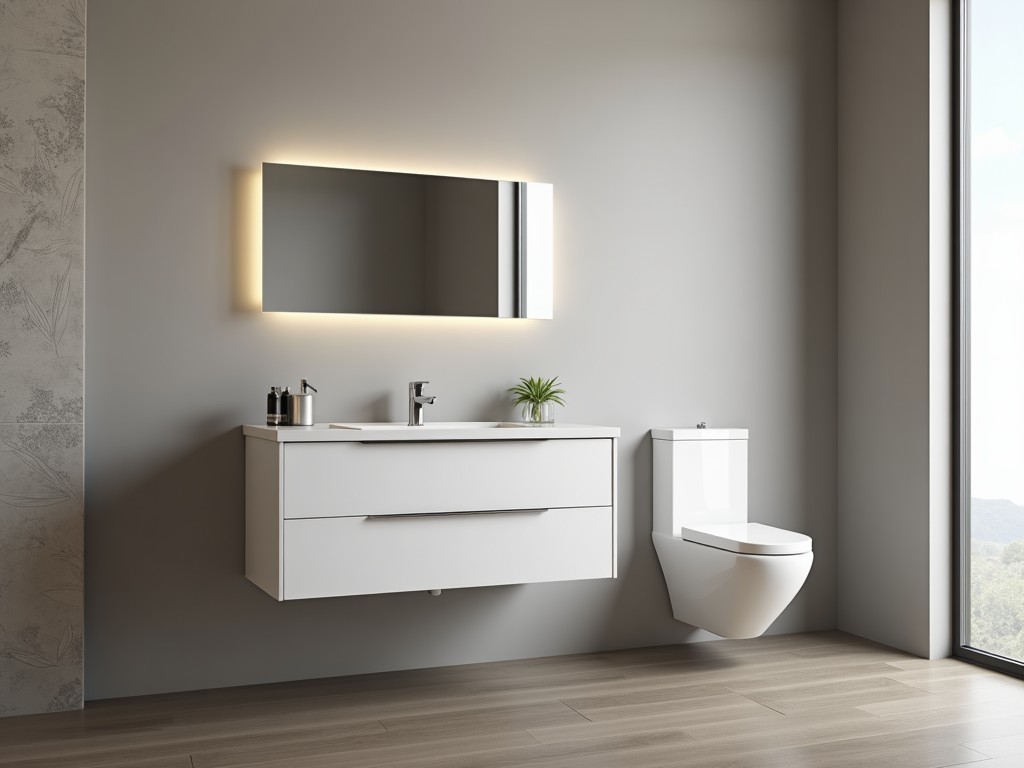
Buy Bathroom Storage Cabinet Wall Hung
Inquire Now
Wall Hung Bathroom Storage Cabinet
Wall‑mounted storage cabinets free floor space in wet environments, simplify cleaning routines, and reduce the risk of water damage to stored items. They are commonly specified for commercial restrooms, laboratory changing areas, and industrial wash‑down zones where hygiene and durability are priorities.
Construction Materials
Typical cabinets are fabricated from either 1.2 mm ± 0.1 mm austenitic stainless steel (grade 304) for direct water exposure, or from 18 mm marine‑grade plywood faced with a 0.8 mm high‑pressure laminate (HPL) for applications where impact resistance is valued. Both options receive a powder‑coat or passivation finish that meets ASTM B117 salt‑spray resistance of ≥ 500 h with no visible corrosion.
Load Capacity and Structural Design
The cabinet is secured to the substrate through two M10 × 80 mm chemical anchor bolts positioned at the top corners of the rear panel. Finite‑element analysis shows a uniformly distributed load capacity of 150 kg before yielding of the mounting brackets, with a safety factor of 2.5 applied for dynamic loads such as door opening impacts.
Dimensions and Configurability
Standard modules are available in widths of 600 mm, 800 mm, and 1000 mm, heights of 600 mm or 900 mm, and a consistent depth of 200 mm. Intermediate sizes can be produced to ± 5 mm tolerance, and internal shelving adjusts in 25 mm increments to accommodate varying storage needs.
Technical Specifications
| Parameter | Typical Value | Notes |
|---|---|---|
| Material Thickness (Steel) | 1.2 mm | ± 0.1 mm tolerance |
| Door Opening Angle | 110° | Concealed hinge, soft‑close option |
| Water Resistance Rating | IP44 | Protected against splashing water |
| Surface Finish | Powder‑coat (RAL 9005) or Passivated Stainless | UV‑stable, ≥ 5 years outdoor exposure |
Installation Considerations
The mounting wall must be concrete, solid masonry, or steel stud backing with a minimum pull‑out resistance of 2 kN per anchor. A waterproofing membrane behind the cabinet is recommended in shower areas to prevent moisture migration into the substrate. Clearance of at least 20 mm above the cabinet facilitates airflow and reduces condensation buildup.
Applications in Industrial and Commercial Settings
In food‑processing plants, wall‑hung cabinets keep cleaning agents off the floor, reducing slip hazards and simplifying wash‑down procedures. Healthcare facilities benefit from the seamless surfaces that minimize microbial harborage, while laboratories appreciate the chemical‑resistant finish for storing reagents. The elevated position also improves ergonomics by placing frequently used items at waist height, decreasing bending motions.
Key Benefits
- Eliminates floor‑standing obstructions, improving traffic flow
- Reduces cleaning time by eliminating under‑cabinet dust accumulation
- Corrosion‑resistant materials extend service life in humid environments
- Modular design allows field re‑configuration without structural changes
Quality Control and Manufacturing
Each cabinet undergoes dimensional verification using a CMM with ± 0.2 mm accuracy, weld inspection per ISO 9606‑1 for stainless steel units, and finish adhesion testing (ASTM D3359) ensuring a minimum rating of 4B. Final functional testing includes 50 cycle door operation under a 20 kg load to confirm hinge durability.
Frequently Asked Questions
Can dimensions be customized?
Yes. Width, height, and internal shelf spacing can be adjusted to project requirements within the limits of material sheet sizes; custom tooling may apply for deviations beyond standard tolerances.
What information is required for a quotation?
Desired external dimensions, material preference (stainless steel or HPL‑faced plywood), finish color, door hinge type, and any accessory needs such as locks or ventilation grilles.
How are cabinets protected during shipping?
Units are packed in double‑wall corrugated cartons with corner protectors, interior foam inserts, and a moisture‑barrier film. Palletized shipments include strapping and tilt‑watch indicators to detect mishandling.
For detailed technical data, CAD files, or to discuss a specific project requirement, please contact our engineering team.
Request a QuoteRelated Products
Related News

custom closet spatial organization and material performance analysis

Bathroom Taps Technical Analysis
