
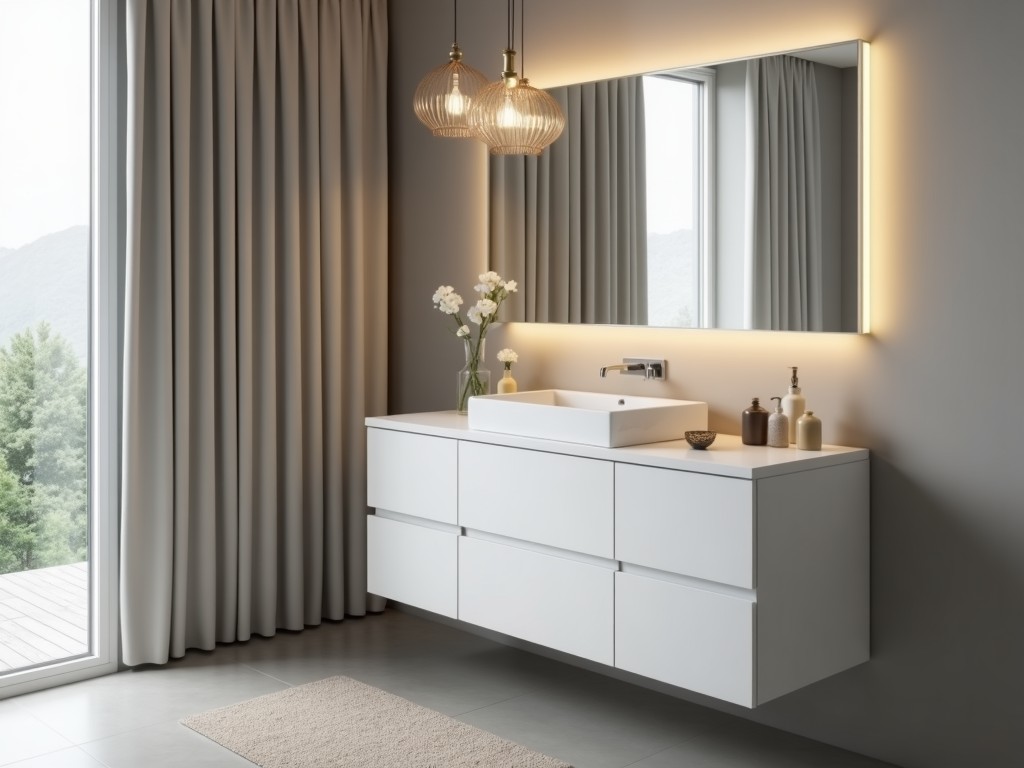
Free Standing Corner Sink Cabinet Factory
Inquire Now
Free Standing Corner Sink Cabinet
A free standing corner sink cabinet is a self‑supporting unit designed to fit into the 90‑degree intersection of two walls, providing a dedicated wash station without relying on wall‑mounted brackets. Its geometry allows efficient use of floor space in facilities where wall space is limited or where equipment layout must avoid structural obstructions.
Design Features
The cabinet utilizes a reinforced corner frame formed by interlocking steel members that distribute loads evenly across both adjoining walls. Adjustable leveling feet compensate for uneven floors, while a removable front panel provides access to plumbing connections and internal bracing. The sink bowl is recessed into the countertop to maintain a flush work surface and reduce splash‑over.
Material Options
- Stainless steel grade 304 – offers corrosion resistance suitable for food‑processing and laboratory environments.
- Powder‑coated carbon steel – provides a durable finish with customizable color codes for facility branding.
- Marine‑grade polymer – lightweight, non‑conductive option for areas requiring chemical resistance to acids and bases.
Dimensional Specifications
| Parameter | Typical Range | Customizable |
|---|---|---|
| Overall width (wall‑to‑wall) | 800 mm – 1200 mm | Yes, in 50 mm increments |
| Depth (from wall to front edge) | 600 mm – 800 mm | Yes, per project |
| Height (including legs) | 850 mm – 950 mm | Adjustable feet ±25 mm |
| Sink bowl diameter | 350 mm – 450 mm | Standard sizes; custom on request |
Manufacturing Process
Production begins with CNC laser cutting of steel blanks to precise corner profiles, followed by robotic MIG welding to ensure consistent bead penetration. After welding, units undergo a deburring stage, then receive either a powder‑coat bake or a passivation bath depending on material selection. Final assembly includes installation of the sink bowl, faucet holes, and leveling hardware.
Quality Control
Each cabinet is inspected for dimensional tolerance (±2 mm on critical axes), weld continuity via ultrasonic spot checks, and finish adhesion using cross‑hatch testing. Load tests simulate a 150 kg dynamic load on the sink basin to verify structural integrity before packaging.
Applications
In commercial kitchens, the corner location frees up linear wall space for cooking equipment while keeping the wash station within the workflow triangle. Laboratories benefit from the chemical‑resistant surfaces and the ability to place the unit beneath overhead reagent shelving. Medical clinics use the design to meet infection‑control guidelines that require seamless, easy‑to‑clean surfaces in procedure rooms.
Installation Considerations
The unit must be positioned on a level substrate; shims are permissible only under the adjustable feet to avoid stressing the corner joint. Plumbing rough‑in should align with the pre‑drilled supply and waste openings, typically located 100 mm above the finished floor. Adequate clearance (minimum 50 mm) behind the cabinet is recommended for service access to trap and shut‑off valves.
Packaging & Shipping
Cabinets are wrapped in polyethylene film, placed on a wooden pallet, and secured with corner protectors and stretch wrap. For overseas shipments, the pallet is placed inside a ISPM‑15 compliant crate with foam edge guards to mitigate impact during handling. Each package includes a packing list, installation manual, and corrosion‑inhibiting sachets for stainless steel variants.
Frequently Asked Questions
- Can dimensions be customized? Yes, width, depth, and sink bowl size can be adjusted in increments defined by the manufacturing tolerances; height adjustment is achieved via the leveling feet.
- What information is required before quotation? Provide the desired overall dimensions, material preference, faucet hole configuration, and any special finish or accessory requirements.
- How is quality inspected? Dimensional checks, weld integrity testing, finish adhesion verification, and load testing are performed on each unit prior to release.
- What packaging methods are available? Standard palletizing with film wrap; optional crate packaging for export or high‑vibration transport.
- What is the typical production lead time? Lead time ranges from 3 to 4 weeks for standard configurations; customized orders may require an additional week for design approval.
Related Products
Related News

custom closet spatial organization and material performance analysis

Bathroom Taps Technical Analysis
