
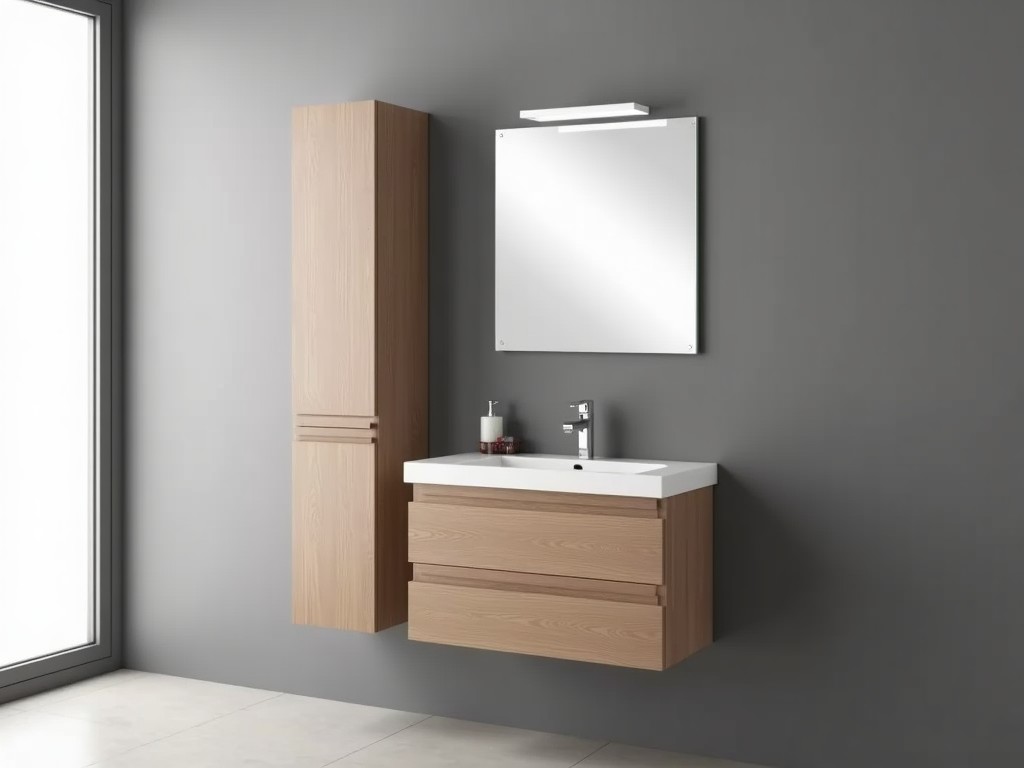
Wall Hung Tall Bathroom Cabinet Top Suppliers
Inquire Now
Wall Hung Tall Bathroom Cabinet – Top Suppliers Overview
Selecting a wall‑hung tall bathroom cabinet involves evaluating structural integrity, moisture resistance, and installation convenience. This overview details the technical attributes that procurement engineers consider when comparing suppliers for commercial and residential projects.
Design & Construction
These cabinets are typically fabricated as a single‑piece carcass with a recessed back panel that allows direct attachment to wall studs or concealed metal brackets. The door overlay ranges from 18 mm to 22 mm, providing sufficient depth for concealed hinges while maintaining a slim profile.
Internal shelving is adjustable on 32 mm increments, using metal pins or cam locks that resist corrosion in humid environments. The cabinet height usually spans 1800 mm to 2100 mm, with a width between 400 mm and 600 mm, optimized for tall storage without exceeding standard stud spacing.
Edge finishing employs PVC or ABS bands of 0.8 mm thickness, heat‑bonded to prevent delamination. All exposed surfaces receive a melamine or laminate overlay rated for at least 150 cycles of wet‑dry testing per ISO 4586.
Material Options
Core panels are manufactured from moisture‑resistant particleboard (MR‑PB) or medium‑density fiberboard (MDF) with a density of 650‑750 kg/m³. For higher load requirements, suppliers may offer plywood cores with cross‑banded veneers.
Surface finishes include high‑pressure laminate (HPL), melamine‑faced chipboard (MFC), or acrylic‑coated panels, each providing different resistance to staining, impact, and UV exposure.
| Material | Typical Density (kg/m³) | Swelling Thickness after 24h Immersion (%) |
|---|---|---|
| MR‑Particleboard | 660 | ≤5 |
| MR‑MDF | 720 | ≤3 |
| Plywood (Birch) | 600‑650 | ≤2 |
Load & Mounting Specifications
Wall‑hung cabinets rely on load‑bearing brackets that transfer weight to studs or a reinforced backing plate. Typical bracket systems support a uniformly distributed load of up to 120 kg per cabinet, with a safety factor of 1.5 applied for dynamic loads such as door opening.
Mounting hardware includes zinc‑plated steel brackets with M8 bolts, nylon washers to prevent galvanic corrosion, and optional anti‑vibration rubber isolators. Installation instructions specify a maximum stud spacing of 600 mm; where studs are absent, a 12 mm plywood backer anchored to the wall is recommended.
Door hinges are concealed, soft‑close types rated for 50,000 cycles, with adjustable torque to accommodate varying door weights (typically 4‑8 kg per door).
Typical Applications
In hospitality environments, tall wall‑hung cabinets provide linen storage while keeping floor space clear for cleaning carts. The reduced protrusion minimizes trip hazards in corridors and facilitates compliance with accessibility guidelines.
Healthcare facilities specify these units for medication or supply storage in patient rooms, where the seamless front surface aids in infection control procedures. The ability to mount at varying heights accommodates different user reach ranges.
Commercial office buildings use them in restrooms for janitorial supplies, benefitting from the lockable door options and moisture‑resistant finishes that withstand frequent cleaning agents.
Quality Control & Testing
Suppliers conduct routine checks on board thickness (±0.2 mm), laminate adhesion strength (minimum 1.2 MPa per ASTM D903), and hinge cycle performance. Finished units undergo a 48‑hour humidity chamber test at 95 % RH and 30 °C to verify resistance to swelling and delamination.
Visual inspection includes edge uniformity, surface gloss consistency (measured at 60° angle), and verification of pre‑drilled hole alignment for hardware. Documentation of test results is available upon request for project qualification.
Customization Capabilities
Clients may specify alternative panel thicknesses (16 mm to 25 mm) to match structural requirements or achieve specific aesthetic profiles. Door configurations range from single‑leaf to double‑leaf with optional middle mullion for wider openings.
Interior accessories such as pull‑out baskets, adjustable shoe racks, or integrated lighting strips can be incorporated during the design phase. Locking mechanisms include cam locks, electronic keypads, or RFID‑enabled options, each with defined power consumption and battery life specifications.
Finish customization extends to color matching via Pantone or RAL codes, surface textures (matte, satin, high gloss), and anti‑fingerprint coatings. All custom options are subject to tooling lead times and minimum order quantities, which vary by supplier.
Packaging & Logistics
Cabinets are packed in double‑wall corrugated cartons with interior foam corner protectors and edge boards. Each unit is wrapped in a polyethylene sleeve to guard against moisture during transit. Palletization follows ISO 6780 standards, with a typical load of 20‑25 cabinets per pallet depending on dimensions.
Shipping marks include part number, destination, and handling instructions such as “Keep Dry” and “This Side Up.” For international shipments, suppliers provide fumigation‑treated pallets and comply with ISPM 15 regulations.
Frequently Asked Questions
- Can dimensions be customized beyond standard ranges? Yes, width, height, and depth can be adjusted according to project drawings, subject to manufacturing constraints.
- What information is required before quotation? Detailed elevation drawings, material finish preferences, hardware specifications, and order quantity.
- Which materials are available for humid environments? MR‑particleboard, MR‑MDF, and marine‑grade plywood with appropriate edge sealing.
- How is quality inspected? Incoming material checks, in‑process dimensional verification, and final functional testing including load and cycle tests.
- What packaging methods are available? Standard carton packaging, reusable crates for repeat orders, and custom pallet configurations.
- How are export shipments protected? Moisture barriers, corner protectors, ISPM‑15 compliant pallets, and optional desiccant packs.
- What is the typical production lead time? Usually 3‑4 weeks for standard configurations; custom finishes or hardware may extend lead time.
- How are samples arranged? Samples can be shipped via express courier with associated costs credited against the first order.
Request a Quote
To obtain a detailed quotation, provide your project specifications including cabinet dimensions, material finish, hardware preferences, and required delivery date. Our engineering team will review the details and respond with a formal offer, including lead time and payment terms.
Submit your inquiry to begin the quotation process.
Related Products
Related News

custom closet spatial organization and material performance analysis

Bathroom Taps Technical Analysis
