
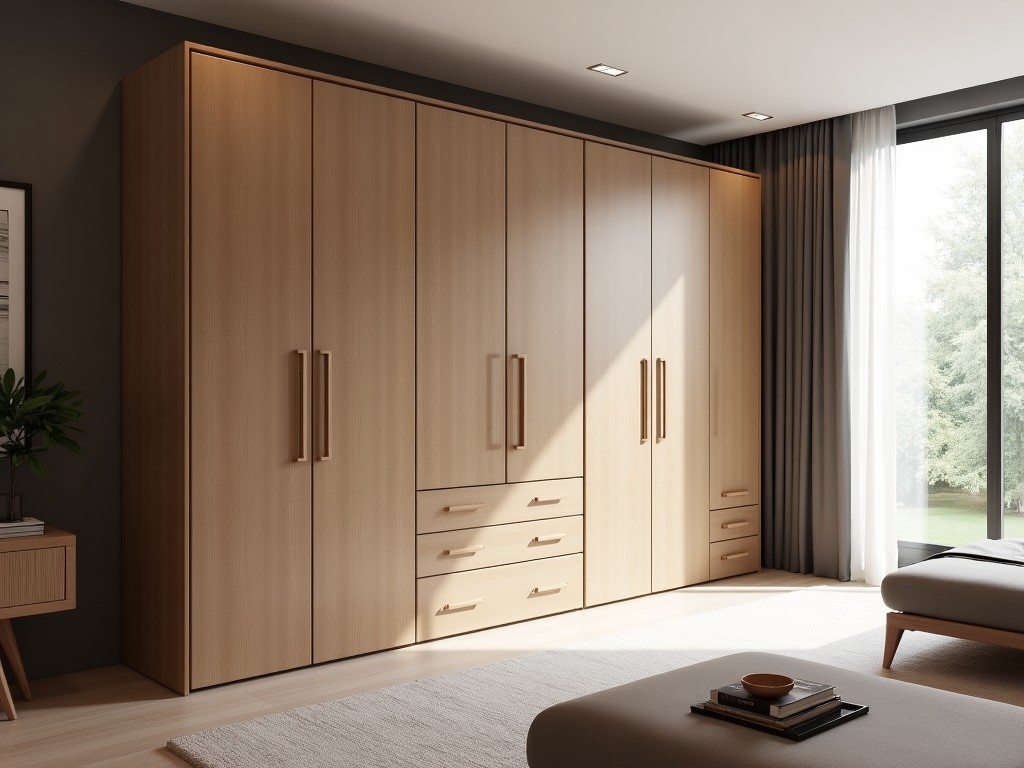
Custom Storage Cabinet Supplier Wholesale
Inquire Now
- Cold‑rolled steel – thickness 1.2 mm to 3.0 mm, suitable for indoor dry environments, can be powder‑coated for corrosion resistance.
- Hot‑rolled steel – thickness 2.0 mm to 5.0 mm, higher impact resistance, often used for heavy‑duty shelving.
- Stainless steel (grade 304 or 316) – thickness 1.0 mm to 2.5 mm, resistant to moisture and chemicals, ideal for food processing or labs.
- Aluminum alloy – thickness 1.5 mm to 4.0 mm, lightweight, non‑magnetic, good for magnetic‑sensitive areas.
- Composite panels – steel skins with insulating core, used when thermal isolation is required.
Customization Capabilities
Customization covers overall envelope dimensions, internal shelving layout, door type, locking mechanisms, and optional accessories such as lighting, grounding points, or ESD protection. Each parameter is defined in the quotation stage based on the customer’s part list and handling procedures.
- Width, depth, height adjustable in 10 mm increments.
- Shelf spacing adjustable; options for fixed, adjustable, or pull‑out trays.
- Door configurations: hinged, sliding, lift‑up, or removable panels.
- Locking: cam lock, electronic keypad, or hasp for padlock.
- Finish: powder coat (various RAL colors), galvanized, or brushed stainless.
- Accessories: LED strip lighting, grounding lugs, anti‑static mats, document holders.
Manufacturing Process
Production starts with CNC laser cutting of blanks to the specified profile, followed by CNC punching for mounting holes and ventilation. Components are then formed on press brakes, welded using MIG/TIG processes as required, and cleaned before surface treatment. Powder coating is applied in a controlled bake oven to achieve uniform thickness and adhesion.
- Cutting tolerance ±0.1 mm.
- Weld penetration verified by visual inspection and, for critical joints, ultrasonic testing.
- Film thickness of powder coat measured with a dry‑film gauge; target 60‑80 µm.
- Final assembly includes installation of hinges, locks, and accessories per the approved drawing.
Quality Assurance and Testing
Each cabinet undergoes dimensional verification against the approved drawing, load testing of shelves to the specified capacity, and finish inspection for holidays or thin spots. Documentation includes a first‑article inspection report and, upon request, a material test certificate.
| Test Item | Method | Acceptance Criteria |
|---|---|---|
| Overall dimensions | CMM or calibrated tape | ±2 mm of drawing |
| Shelf load capacity | Static load applied evenly | No permanent deformation after 24 h at rated load |
| Finish adhesion | Cross‑hatch tape test (ASTM D3359) | Rating 5B (no removal) |
| Door alignment | Gap measurement at closing | Uniform gap ≤1.5 mm |
Typical Applications
In a warehouse, cabinets are used to store tooling, fixtures, and spare parts where quick access and protection from dust are required. The ability to specify shelf height allows accommodation of bulky items without wasting vertical space. In a laboratory, cabinets with chemical‑resistant finishes and sealed doors prevent contamination of volatile reagents. Manufacturing cells benefit from cabinets integrated with grounding points to protect sensitive electronics from electrostatic discharge.
- Warehouse – storage of jigs, fixtures, and maintenance tools; configurable shelving for varying part sizes.
- Laboratory – storage of chemicals and samples; optional vented doors and interior liners.
- Electronics assembly – ESD‑safe version with conductive coating and grounding lugs.
- Automotive – heavy‑duty version for engine components; reinforced frames and higher load ratings.
- Food processing – stainless steel construction with seamless interiors for easy cleaning.
Frequently Asked Questions
- Can dimensions be customized?
- Yes. Width, depth, and height can be adjusted in 10 mm increments to match the installation envelope.
- What information is required before quotation?
- Required details include overall dimensions, desired load per shelf, material preference, door type, locking method, and any accessory needs (lighting, grounding, etc.).
- What materials are available?
- Cold‑rolled steel, hot‑rolled steel, stainless steel (304/316), aluminum alloy, and composite panels are standard options.
- How is quality inspected?
- Each unit undergoes dimensional check, shelf load test, finish adhesion test, and door alignment verification before shipment.
- What packaging methods are available?
- Cabinets are wrapped in protective film, placed on pallets, and secured with corner protectors and stretch film; export crating is available upon request.
- What is the typical production lead time?
- Lead time varies with complexity and material availability, generally ranging from 3 to 6 weeks after drawing approval.
- How are samples arranged?
- A prototype or sample unit can be produced after design confirmation; costs are credited toward the first production order.
Get a Quote
To discuss your specific storage requirements and receive a detailed quotation, please provide the project specifications through the contact form.
Now close the outer div. We need to ensure every element has style attribute. We have given style to div, h1, p, h2, p, h2, p, ul, li etc. We need to check each. Let's list: - outer div: style defined. - h1: style. - p after h1: style. - h2 (Design): style. - p after that: style. - h2 (Material Options): style. - p after that: style. - ul (material options): style. - li each: style. - h2 (Customization): style. - p after that: style. - ul (customization): style. - li each: style. - h2 (Manufacturing): style. - p after that: style. - ul (manufacturing): style. - li each: style.Custom Storage Cabinet Supplier Wholesale
Industrial storage cabinets are engineered to meet specific load, dimension, and accessibility requirements of manufacturing, warehousing, and laboratory environments. Unlike off‑the‑shelf units, a custom solution allows the cabinet geometry, material thickness, and internal layout to be matched directly to the workflow and stored items.
Design and Engineering Considerations
The design process begins with defining the maximum expected load per shelf, the frequency of access, and any environmental factors such as humidity, chemical exposure, or temperature extremes. Engineers then calculate required material thickness, reinforcement placement, and door swing clearance to ensure structural stability and ergonomic operation.
Material Options
Common base materials include cold‑rolled steel, hot‑rolled steel, aluminum alloys, stainless steel, and composite panels. Selection depends on load, environment, and finish requirements.
- Cold‑rolled steel – thickness 1.2 mm to 3.0 mm, suitable for indoor dry environments, can be powder‑coated for corrosion resistance.
- Hot‑rolled steel – thickness 2.0 mm to 5.0 mm, higher impact resistance, often used for heavy‑duty shelving.
- Stainless steel (grade 304 or 316) – thickness 1.0 mm to 2.5 mm, resistant to moisture and chemicals, ideal for food processing or labs.
- Aluminum alloy – thickness 1.5 mm to 4.0 mm, lightweight, non‑magnetic, good for magnetic‑sensitive areas.
- Composite panels – steel skins with insulating core, used when thermal isolation is required.
Customization Capabilities
Customization covers overall envelope dimensions, internal shelving layout, door type, locking mechanisms, and optional accessories such as lighting, grounding points, or ESD protection. Each parameter is defined in the quotation stage based on the customer’s part list and handling procedures.
- Width, depth, height adjustable in 10 mm increments.
- Shelf spacing adjustable; options for fixed, adjustable, or pull‑out trays.
- Door configurations: hinged, sliding, lift‑up, or removable panels.
- Locking: cam lock, electronic keypad, or hasp for padlock.
- Finish: powder coat (various RAL colors), galvanized, or brushed stainless.
- Accessories: LED strip lighting, grounding lugs, anti‑static mats, document holders.
Manufacturing Process
Production starts with CNC laser cutting of blanks to the specified profile, followed by CNC punching for mounting holes and ventilation. Components are then formed on press brakes, welded using MIG/TIG processes as required, and cleaned before surface treatment. Powder coating is applied in a controlled bake oven to achieve uniform thickness and adhesion.
- Cutting tolerance ±0.1 mm.
- Weld penetration verified by visual inspection and, for critical joints, ultrasonic testing.
- Film thickness of powder coat measured with a dry‑film gauge; target 60‑80 µm.
- Final assembly includes installation of hinges, locks, and accessories per the approved drawing.
Quality Assurance and Testing
Each cabinet undergoes dimensional verification against the approved drawing, load testing of shelves to the specified capacity, and finish inspection for holidays or thin spots. Documentation includes a first‑article inspection report and, upon request, a material test certificate.
| Test Item | Method | Acceptance Criteria |
|---|---|---|
| Overall dimensions | CMM or calibrated tape | ±2 mm of drawing |
| Shelf load capacity | Static load applied evenly | No permanent deformation after 24 h at rated load |
| Finish adhesion | Cross‑hatch tape test (ASTM D3359) | Rating 5B (no removal) |
| Door alignment | Gap measurement at closing | Uniform gap ≤1.5 mm |
Typical Applications
In a warehouse, cabinets are used to store tooling, fixtures, and spare parts where quick access and protection from dust are required. The ability to specify shelf height allows accommodation of bulky items without wasting vertical space. In a laboratory, cabinets with chemical‑resistant finishes and sealed doors prevent contamination of volatile reagents. Manufacturing cells benefit from cabinets integrated with grounding points to protect sensitive electronics from electrostatic discharge.
- Warehouse – storage of jigs, fixtures, and maintenance tools; configurable shelving for varying part sizes.
- Laboratory – storage of chemicals and samples; optional vented doors and interior liners.
- Electronics assembly – ESD‑safe version with conductive coating and grounding lugs.
- Automotive – heavy‑duty version for engine components; reinforced frames and higher load ratings.
- Food processing – stainless steel construction with seamless interiors for easy cleaning.
Frequently Asked Questions
- Can dimensions be customized?
- Yes. Width, depth, and height can be adjusted in 10 mm increments to match the installation envelope.
- What information is required before quotation?
- Required details include overall dimensions, desired load per shelf, material preference, door type, locking method, and any accessory needs (lighting, grounding, etc.).
- What materials are available?
- Cold‑rolled steel, hot‑rolled steel, stainless steel (304/316), aluminum alloy, and composite panels are standard options.
- How is quality inspected?
- Each unit undergoes dimensional check, shelf load test, finish adhesion test, and door alignment verification before shipment.
- What packaging methods are available?
- Cabinets are wrapped in protective film, placed on pallets, and secured with corner protectors and stretch film; export crating is available upon request.
- What is the typical production lead time?
- Lead time varies with complexity and material availability, generally ranging from 3 to 6 weeks after drawing approval.
- How are samples arranged?
- A prototype or sample unit can be produced after design confirmation; costs are credited toward the first production order.
Get a Quote
To discuss your specific storage requirements and receive a detailed quotation, please provide the project specifications through the contact form.
Related Products
Related News

custom closet spatial organization and material performance analysis

Bathroom Taps Technical Analysis
