
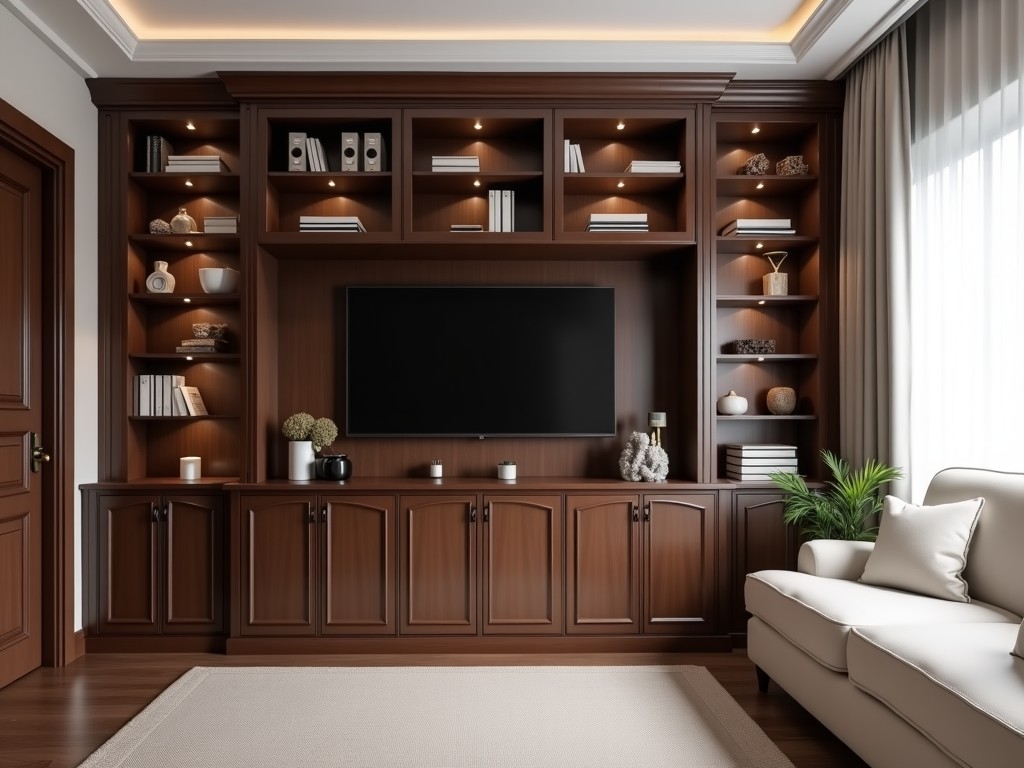
Custom Wine Storage Cabinets Top Suppliers
Inquire Now
Custom Wine Storage Cabinets – Top Suppliers Overview
Selecting a wine storage cabinet involves balancing temperature stability, humidity control, vibration isolation, and accessibility. Suppliers that offer fully custom solutions engineer each unit to the specific spatial constraints and operational workflows of wineries, distributors, or retail environments.
Design and Engineering Considerations
Cabinet dimensions are derived from bottle count, shelving geometry, and required clearance for service doors. Thermal load calculations determine the required insulation thickness and the capacity of the active cooling system to maintain a set point of 12 °C ± 0.5 °C under varying ambient conditions.
Vibration analysis guides the selection of compressor mounting methods and the use of isolation pads to keep measurable acceleration below 0.01 g, preventing sediment disturbance in aged wines.
Material Selection
Exterior panels commonly use powder‑coated steel or marine‑grade aluminum for corrosion resistance in humid cellars. Interior linings are often food‑grade stainless steel (AISI 304) or UV‑stable acrylic, both providing non‑porous surfaces that simplify cleaning and inhibit mold growth.
Insulation cores are typically closed‑cell polyurethane with a thermal conductivity of 0.022 W/(m·K), chosen for its ability to maintain thin cabinet walls while delivering high R‑value per inch.
Customization Capabilities
- Adjustable racking systems accommodating Bordeaux, Burgundy, Champagne, and specialty formats.
- Integrated humidity control modules capable of maintaining 50 %–80 % RH with ±2 % tolerance.
- LED lighting with selectable color temperature (2700 K–4000 K) and dimming controls.
- Security options including electronic locks, access logs, and tamper‑evident seals.
- External finishes matched to existing architectural elements via RAL or custom paint codes.
Manufacturing Process
Fabrication begins with CNC‑cut panels to tolerances of ±0.5 mm, ensuring seamless assembly and minimal thermal bridging. Welded joints are inspected using dye‑penetrant testing to confirm integrity before insulation insertion.
Cooling circuits are pressure‑tested at 1.5 × design pressure for 10 minutes, and electrical components undergo IEC 60335‑2‑24 compliance checks for safety in wet environments.
Quality Assurance and Testing
Each completed cabinet undergoes a 48‑hour pull‑down test where interior temperature is logged at 5‑minute intervals to verify stability within the specified tolerance band. Humidity sensors are calibrated against a certified chilled mirror hygrometer.
Final inspection includes door seal compression measurement (target 30 %–40 % deflection) and vibration amplitude verification using a portable accelerometer.
Typical Applications in Wine Industry
Wineries use custom cabinets for barrel‑room overflow storage, allowing precise temperature control for small‑lot experimental batches without affecting main cellar conditions. Distribution centers deploy them as staging zones where orders are assembled prior to shipment, reducing handling time and preserving product integrity.
Retail boutiques incorporate display‑grade units with UV‑filtered glass doors to showcase premium labels while maintaining storage conditions visible to customers.
Comparison of Standard vs. Custom Configurations
| Attribute | Standard Cabinet | Custom Cabinet |
|---|---|---|
| Temperature range | Fixed 10 °C–18 °C | Tailored set point, ±0.2 °C control |
| Humidity control | Passive, optional add‑on | Active humidification/dehumidification, PID regulated |
| Interior dimensions | Pre‑defined modules | Cut‑to‑fit, optimized for bottle layout |
| Door seal type | Standard magnetic gasket | Custom compression seal, low‑leakage design |
| Lead time | 2–4 weeks (stock) | 6–10 weeks (design‑to‑delivery) |
Frequently Asked Questions
Can dimensions be customized to fit an existing niche?
Yes. We require the exact opening width, height, and depth, plus any obstructions such as piping or conduit, to generate a CAD model that ensures proper clearance for doors and ventilation.
What information is needed before a quotation?
Project specifications include desired bottle capacity, temperature and humidity set points, power availability (voltage/phase), preferred interior finish, and any regulatory requirements such as NSF or CE marking.
Which materials are available for the interior lining?
Standard options are AISI 304 stainless steel, food‑grade HDPE, and UV‑stable acrylic. Alternatives such as powder‑coated aluminum or antimicrobial coatings are available upon request.
How is quality inspected before shipment?
Each unit passes a functional test cycle (temperature pull‑down, humidity stability, door seal integrity) and a visual inspection for surface finish, weld quality, and labeling accuracy.
What packaging methods protect the cabinet during transit?
Cabinets are wrapped in vapor‑barrier film, placed on custom‑cut pallets with corner protectors, and secured with strapping. For export, ISPM‑15 compliant wooden crates are used.
What is the typical production lead time?
Lead time ranges from 6 to 10 weeks after design approval, depending on material availability and complexity of the cooling system.
How are samples arranged?
We can provide a scaled‑down demonstrator module that replicates the cooling and control electronics, allowing validation of performance parameters before full‑scale production.
Request a Quote
To begin a custom wine storage cabinet project, submit your layout drawings, performance specifications, and any site constraints via our inquiry form. Our engineering team will respond with a detailed technical proposal and cost estimate within two business days.
Related Products
Related News

custom closet spatial organization and material performance analysis

Bathroom Taps Technical Analysis
