
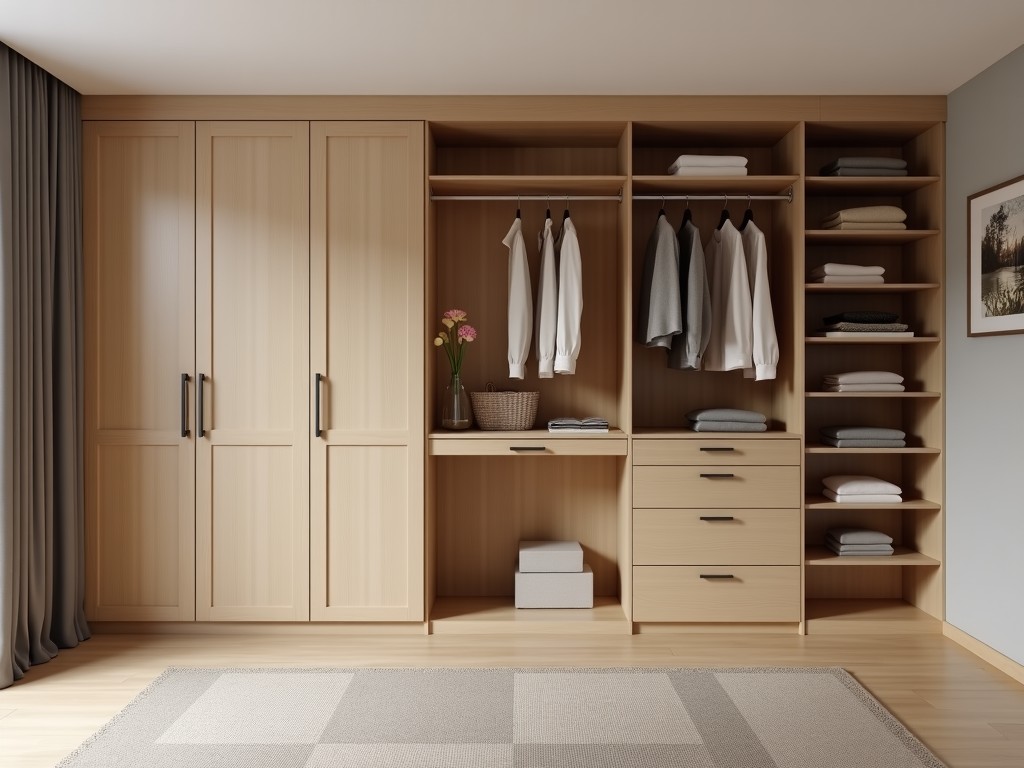
Average Cost Of Custom Closet Systems
Inquire Now
Average Cost of Custom Closet Systems
Custom closet systems are engineered storage solutions built to fit specific room dimensions and user requirements. Unlike off‑the‑shelf units, each component is fabricated to match the exact width, height, and depth of the installation space, which influences material usage, labor time, and overall price.
Key Cost Drivers
- Material selection – substrate type (particleboard, MDF, plywood, solid wood) and surface finish (laminate, veneer, paint) directly affect unit cost per square foot.
- Door mechanism – sliding doors require track hardware and rollers, while hinged doors need hinges and possibly soft‑close mechanisms.
- Interior accessories – drawers, shoe racks, pull‑out baskets, and integrated lighting add both material and labor.
- Finish complexity – multi‑step painting or high‑gloss lacquer increases labor hours compared to a single‑laminate wrap.
- Installation site conditions – floor levelness, wall stud availability, and ceiling height affect the time needed for anchoring and alignment.
Typical Price Ranges
| Closet Type | Base Material | Cost per Linear Foot (USD) | Notes |
|---|---|---|---|
| Wire shelving system | Steel wire with epoxy coating | $30 – $50 | Lowest cost, limited aesthetic options |
| Laminate‑covered particleboard | Particleboard (600‑800 kg/m³) + 0.8 mm melamine laminate | $70 – $110 | Standard for residential closets |
| Veneer‑faced MDF | MDF (700‑850 kg/m³) + 0.5 mm wood veneer | $110 – $170 | Mid‑range appearance, good stability |
| Solid wood (hardwood) | Maple, oak, or walnut, kiln‑dried | $180 – $260 | Premium finish, higher material weight |
Material Options and Cost Impact
The substrate determines structural rigidity and weight. Particleboard with a density of 650 kg/m³ offers adequate stiffness for shelving spans up to 600 mm when supported by side panels. MDF provides a smoother surface for paint but has lower moisture resistance. Plywood (5‑ply, 0.6 mm face veneer) adds cross‑grain strength, allowing longer unsupported spans. Solid hardwood provides the highest modulus of elasticity (~12 GPa) but increases material cost proportionally to board footage.
Surface finishes add a cost layer: melamine laminate ($2‑$4/ft²), PVC edge banding ($0.50/ft), water‑based paint ($3‑$6/ft² including primer and two coats), and natural veneer ($4‑$8/ft²). Each finish also influences labor: spray painting requires booth time and curing, while laminate application is a cold‑press operation.
Customization Features that Affect Price
- Door type – sliding doors add $15‑$25/linear foot for track and rollers; hinged doors add $5‑$10/linear foot for hinges and possible soft‑close.
- Drawers – full‑extension ball‑bearing slides ($12‑$18 per drawer) plus drawer box material.
- Interior accessories – shoe racks ($8‑$15 per unit), pull‑out baskets ($10‑$20), built‑in LED lighting ($20‑$30 per linear foot).
- Finish details – matte vs. high‑gloss lacquer adds $4‑$7/ft² for additional sanding and coating passes.
Installation and Labor Considerations
Labor rates for closet installation typically range from $50‑$80 per hour depending on region and union rules. A standard reach‑in closet (1200 mm wide, 2400 mm high) with sliding doors and basic shelving requires approximately 4‑6 hours of labor, including wall anchoring, leveling, and hardware alignment. Walk‑in configurations with multiple corners and accessories can increase labor to 10‑14 hours.
Site preparation costs may arise if walls need stud reinforcement or floor leveling. These are quoted separately and are not included in the per‑linear‑foot material cost.
Estimating Total Project Cost
- Measure the total linear footage of cabinet sides (top + bottom + shelves) that will be fabricated.
- Multiply by the selected material‑finish cost per linear foot from the table above.
- Add the cost of selected accessories (doors, drawers, lighting) using the per‑item values.
- Add labor hours × hourly rate.
- Include any site‑specific preparation fees.
Example: A 10‑foot (3048 mm) reach‑in closet using laminate‑covered particleboard ($90/ft) → $900 material. Sliding doors add $20/ft → $200. Two drawers at $15 each → $30. Labor 5 hrs × $65/hr → $325. Total ≈ $1,455.
Lifecycle Value and Maintenance
Material durability influences long‑term cost. Particleboard with melamine resists surface scratching but can swell if exposed to sustained moisture (>70 % RH). MDF shows similar moisture sensitivity but offers better screw holding. Solid wood, when sealed with polyurethane, tolerates humidity fluctuations and can be refinished, extending service life beyond 15 years. Maintenance typically involves wiping with a damp cloth and checking hinge tightness annually.
Frequently Asked Questions
| Question | Answer |
|---|---|
| Can dimensions be customized to millimeter precision? | Yes. CNC cutting allows tolerances of ±0.5 mm for panel dimensions, ensuring tight fit against walls and ceilings. |
| What information is required before a quotation? | Room width, height, depth; desired door type; preferred substrate and finish; list of interior accessories; and any site constraints such as uneven floors or obstructions. |
| Which materials are available for humid environments? | Marine‑grade plywood, PVC‑coated MDF, or solid wood with a sealed polyurethane finish are commonly selected for areas with relative humidity above 60 %. |
| How is quality inspected before shipment? | Each panel undergoes dimensional verification, surface finish adhesion test (cross‑cut tape test), and hardware functional check (door slide smoothness, drawer detent). |
| What packaging methods protect components during transit? | Flat panels are stacked with corner protectors, wrapped in polyethylene film, and placed in corrugated cartons rated for 30 kg stacking load. Hardware is packed in separate blister packs to prevent scratching. |
Related Products
Related News

custom closet spatial organization and material performance analysis

Bathroom Taps Technical Analysis
