
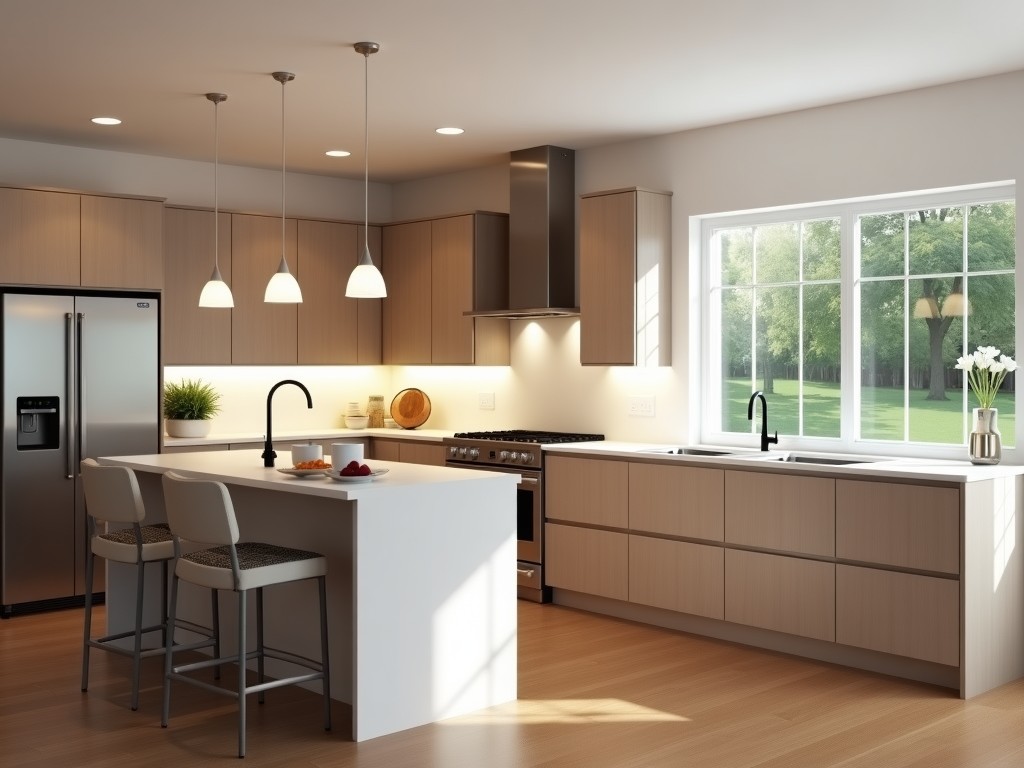
Buy Average Cost Of Custom Kitchen Cabinets
Inquire Now
Average Cost of Custom Kitchen Cabinets
Overview
Custom kitchen cabinets are built to fit specific dimensions and design requirements of a residential or commercial kitchen. Unlike stock units, each cabinet is fabricated from raw panels to match the exact opening, door overlay, and interior accessories specified by the buyer. This process introduces cost variables that depend on material selection, construction method, and finish complexity.
Cost Influencers
The primary drivers of cabinet price are the core panel material, door style, hardware specifications, and overall square footage. Additional cost contributors include edge banding type, finish system (paint, stain, laminate), and any specialized accessories such as pull‑out shelves or soft‑close mechanisms. Labor for CNC cutting, assembly, and finishing also scales with the number of unique parts.
- Core panel substrate – particleboard, MDF, plywood, or solid wood, each with different density, moisture resistance, and cost per square foot.
- Door construction – slab, raised‑panel, or inset, affecting material waste and machining time.
- Hardware grade – hinges, slides, and pulls rated by load capacity and cycle life.
- Finish system – melamine laminate, polyurethane paint, or catalyzed stain, influencing material and labor steps.
- Accessories – pull‑out trays, lazy Susans, or interior lighting that add parts and assembly time.
Material Options
Particleboard is the most economical substrate, typically 6‑10 lb/ft³ density, suitable for low‑stress interior boxes when laminated on both sides. MDF offers a uniform surface with 45‑50 lb/ft³ density, providing excellent paint adhesion and minimal telegraphing of grain, but it is heavier and less resistant to sagging over long spans.
Plywood, constructed from cross‑laminated veneers, delivers higher stiffness and screw‑holding capacity, with typical 5‑ply ¾‑inch panels weighing about 40 lb/ft³. Solid wood, such as maple or oak, provides the highest modulus of elasticity and natural appearance, but its cost is driven by raw material price and seasonal movement considerations.
Door Styles & Hardware
Door styles affect both material usage and machining time. A full‑overlay slab door uses a single panel of substrate, minimizing seams but requiring precise edge banding on all four sides. A raised‑panel door adds a solid wood or MDF center panel within a frame, increasing material waste and requiring additional joinery such as cope‑and‑stick or mortise‑and‑tenon. Hardware choices—hinges, drawer slides, and pulls—are rated by load capacity (e.g., 75 lb per hinge, 100 lb per slide) and cycle life, which directly influences the hardware cost per cabinet.
Manufacturing Tolerances
Dimensional accuracy is critical for field fit; CNC routers typically hold ±0.5 mm on panel dimensions and ±0.2 mm on hole locations for hinges. Edge banding thickness (usually 0.5 mm PVC or 1 mm wood veneer) adds to the overall width and must be accounted for in the cabinet’s external dimensions. Consistent tolerance reduces on‑site shimming and ensures proper door alignment, which lowers installation labor and callback risk.
Installation Considerations
Cabinets must be anchored to wall studs or a supporting rail system capable of bearing the combined load of the cabinet box, doors, and stored contents—typically 150‑200 lb per linear foot for a standard base unit. Clearance requirements include a minimum ½‑inch gap at the top for crown molding and 1‑inch at the bottom for flooring expansion. Proper leveling and plumb installation, verified with a laser level within 1 mm per meter, prevents door binding and uneven wear over the product’s service life.
Price Comparison (USD per Linear Foot)
| Material / Construction | Cost Range (per ft) | Typical Application |
|---|---|---|
| Particleboard slab | $80‑$120 | Budget‑friendly rental units |
| MDF slab | $100‑$150 | Paint‑grade residential kitchens |
| Plywood slab | $130‑$180 | High‑strength commercial pantry |
| Solid wood slab | $200‑$300 | Premium custom homes |
| Raised‑panel MDF | $150‑$220 | Traditional styled kitchens |
| Raised‑panel solid wood | $250‑$350 | Luxury executive suites |
Frequently Asked Questions
Can dimensions be customized?
Yes. Each cabinet is fabricated to the exact width, height, and depth supplied in the shop drawing, allowing for filler panels, appliance cut‑outs, and unique interior layouts.
What information is required before quotation?
A preliminary layout showing overall cabinet runs, desired door style, finish type, and any special accessories (e.g., pull‑out trays, lighting) enables an accurate material take‑off and labor estimate.
Which materials are available for the cabinet box?
Particleboard, MDF, plywood, and solid wood are stocked in standard thicknesses (½‑inch, ¾‑inch). Alternative cores such as agrifiber or bamboo‑based panels are available upon request.
How is quality inspected?
Each panel undergoes thickness and squareness verification; assembled cabinets are checked for diagonal deviation (< 2 mm) and door gap uniformity (< 0.5 mm). Finish adhesion is tested per ASTM D3359 tape test.
What packaging methods protect the cabinets during transit?
Flat‑packed units are wrapped in polyethylene film, placed on edge‑protected pallets, and secured with polyester strapping. Corner guards and foam inserts prevent impact damage to faces and edges.
Request a Quote
To receive a detailed quotation that includes material selection, hardware specs, and lead time, provide your project dimensions, desired door style, and finish preferences. Our engineering team will review the specifications and return a itemized cost breakdown within two business days.
Request a QuoteRelated Products
Related News

custom closet spatial organization and material performance analysis

Bathroom Taps Technical Analysis
