
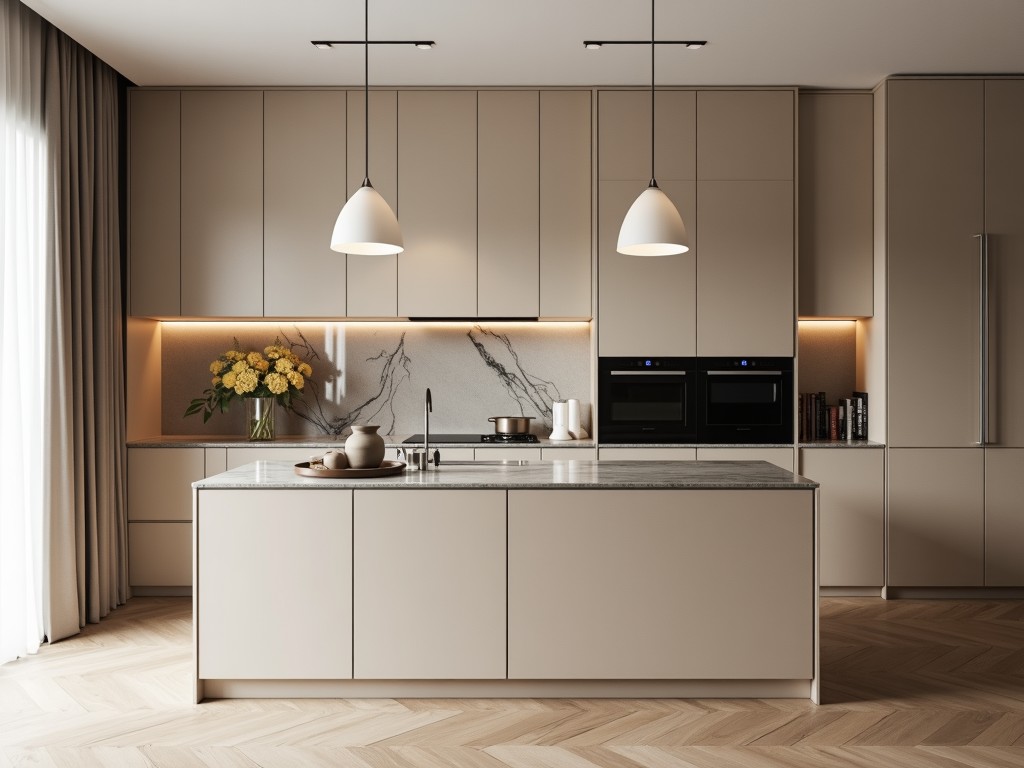
China Custom Kitchen Cabinet Wholesale Direct
Inquire Now
China Custom Kitchen Cabinet Wholesale Direct
This page outlines the technical characteristics of kitchen cabinets sourced directly from Chinese manufacturers for wholesale distribution. It focuses on material properties, construction methods, dimensional control, and quality verification relevant to procurement engineers and OEM buyers.
Material Selection and Specifications
Cabinet boxes are typically manufactured from 18 mm thick particleboard or medium-density fiberboard (MDF) core, with a moisture content stabilized to 8 ± 2 % to limit seasonal movement. The core is faced with a 0.3 mm melamine-impregnated paper laminate on both sides, providing a surface hardness of approximately 150 MPa (measured by Taber abrasion). Alternative face options include 0.4 mm PVC film or 0.25 mm UV‑cured acrylic coating, each offering different chemical resistance and gloss levels.
Edge sealing uses 0.5 mm PVC or ABS edge band, applied with hot‑melt adhesive delivering a peel strength of ≥ 1.8 N/mm. This prevents substrate swelling at cut edges and maintains dimensional stability under humid conditions typical of kitchen environments.
Construction Methods and Joinery
Primary box assembly employs a combination of cam‑lock fasteners and pre‑drilled dowel holes, providing a shear capacity of roughly 250 N per joint when tested per EN 14749. Corner reinforcement includes 8 mm × 8 mm pine blocks glued with PVAc adhesive, raising the moment resistance of the joint by ≈ 35 %.
Shelf supports are metal pin‑in‑hole systems with a 5 mm diameter steel pin, rated for a static load of 150 N per pin before permanent deformation. Adjustable shelves use a 2 mm thick steel bracket with a locking cam, allowing vertical positioning in 32 mm increments.
Door hinges are concealed, soft‑close European style, rated for 50,000 cycles at a torque of 0.45 Nm. Drawer slides are full‑extension ball‑bearing types, capable of 30 kg dynamic load per pair with a lateral deflection < 0.2 mm under load.
Dimensional Tolerances and Modularity
Overall cabinet height is held to ± 1.5 mm, width to ± 1.0 mm, and depth to ± 1.0 mm across a production run. These tolerances enable repeatable ganged installations without noticeable gaps when modules are aligned.
Standard modules are based on a 600 mm width grid, with available heights of 720 mm (base), 900 mm (wall), and 2100 mm (tall). Depth options are 560 mm for base and wall units, and 600 mm for tall pantry cabinets. Custom lengths can be achieved by splicing modules with intermediate stiles, maintaining the same tolerance band.
Surface Finish and Durability
Melamine laminate surfaces exhibit a surface energy of 38 mN/m, resulting in good adhesion for common kitchen adhesives and resistance to staining from acidic substances (pH 4) for up to 24 hours without visible change. The Taber abrasion test (CS‑10 wheels, 500 g load) shows a wear index of ≤ 80 mg loss per 1000 cycles, suitable for high‑frequency contact.
PVC film finishes provide a higher gloss (≈ 85 GU at 60°) and improved water vapor transmission resistance (WVTR < 0.5 g/m²·day). UV‑cured acrylic coatings achieve a pencil hardness of 2H and a scratch resistance rating of 3 per ASTM D3363, making them appropriate for premium lines where surface appearance is critical.
All finishes are cured at 80 °C for 15 minutes, ensuring cross‑link density sufficient to prevent delamination under repeated thermal cycling (−10 °C to +60 °C).
Customization Options
- Door styles: slab, shaker, raised panel, with optional glass inserts (tempered, 4 mm thick).
- Hardware upgrades: soft‑close hinges, push‑to‑open mechanisms, concealed drawer locks.
- Interior accessories: pull‑out trays, lazy susans, spice racks, each rated for specific load capacities (e.g., pull‑out tray 20 kg).
- Finish variations: matte, satin, high‑gloss, textured wood grain, and custom color matching to RAL or NCS standards.
- Integrated lighting: LED strips with aluminum channels, powered by 12 V DC drivers, providing ≥ 300 lx illuminance on work surfaces.
Quality Assurance and Testing
Incoming raw material is checked for board density (target 650 kg/m³ ± 30) and formaldehyde emission (E1 class, ≤ 0.1 ppm). During production, each cabinet undergoes a dimensional audit using a CMM with a repeatability of 0.02 mm.
Finished units are subjected to a 72‑hour climate cycle (−10 °C/90 % RH to +40 °C/20 % RH) to verify that dimensional change remains within ± 0.5 mm. Load testing applies 150 N to each shelf for 1 hour; residual deflection must be < 0.3 mm.
Adhesion of the surface laminate is measured by a cross‑hatch tape test (ASTM D3359); a rating of 5B (no removal) is required for acceptance. Random samples are also subjected to a 500‑cycle abrasion test to confirm wear index compliance.
All inspection data are recorded in a traceable batch record, allowing the supplier to provide a material test certificate (MTC) upon request.
Typical Applications in Commercial and Residential Projects
The modular design and tight tolerances make these cabinets suitable for multi‑unit residential developments where repetitive layout reduces installation time. In commercial settings such as hotels or cafeterias, the high‑cycle hinge and slide ratings support frequent use without premature wear.
Because the core material is low‑emission MDF or particleboard, the cabinets satisfy indoor air quality requirements for LEED‑EQ credit 4.1 when paired with low‑VOC adhesives.
The ability to match specific RAL or NCS colors enables architects to maintain a consistent palette across cabinetry, wall panels, and furniture, reducing the need for on‑site touch‑up.
Standard Module Specifications
| Parameter | Base Cabinet (600 mm W) | Wall Cabinet (600 mm W) | Tall Pantry (600 mm W) |
|---|---|---|---|
| Height | 720 mm | 900 mm | 2100 mm |
| Depth | 560 mm | 560 mm | 600 mm |
| Shelf Thickness | 18 mm | 18 mm | 18 mm |
| Load Capacity per Shelf | 150 N (≈ 15 kg) | 120 N (≈ 12 kg) | 100 N (≈ 10 kg) |
| Door Hinge Type | Concealed soft‑close | Concealed soft‑close | Concealed soft‑close |
| Drawer Slide Rating | 30 kg dynamic per pair | — | — |
Values are typical; exact dimensions can be adjusted to project requirements.
Packaging and Logistics for Wholesale Orders
Cabinets are shipped flat‑packed in 5‑mm corrugated cardboard sleeves, with each panel separated by 3‑mm polyethylene foam to prevent surface abrasion. Corner protectors made of 10 mm expanded polystyrene are taped to the panel edges, delivering a compressive strength of 0.25 MPa.
Pallets are configured as 1.2 m × 1.0 m footprints, holding up to 24 base cabinets per layer, secured with PET strapping rated at 500 N tensile strength. A 150‑µm polyethylene moisture barrier liner lines the pallet base to protect against condensation during transit.
Each shipment includes a packing list with part numbers, revision level, and QR code linking to the corresponding installation drawing. This enables rapid verification at the receiving dock.
Getting a Quote and Sample Process
To initiate a quotation, provide the following technical data:
- Desired module dimensions (width, height, depth) and quantities.
- Material preference (particleboard, MDF, core thickness).
- Finish type (melamine, PVC, UV acrylic) and color reference (RAL/NCS).
- Hardware specifications (hinge, slide, accessories).
- Delivery destination and required incoterm.
Upon receipt, the supplier returns a detailed quotation within two business days, including unit price, tooling charges (if any), and estimated lead time. Sample panels (one door, one box, and one hardware set) can be dispatched via express courier, typically arriving within 5‑7 working days, allowing the buyer to verify finish adhesion, dimensional accuracy, and hardware function before committing to a production run.
Ready to discuss your specific kitchen cabinet requirements?
Request a QuoteRelated Products
Related News

custom closet spatial organization and material performance analysis

Bathroom Taps Technical Analysis
