
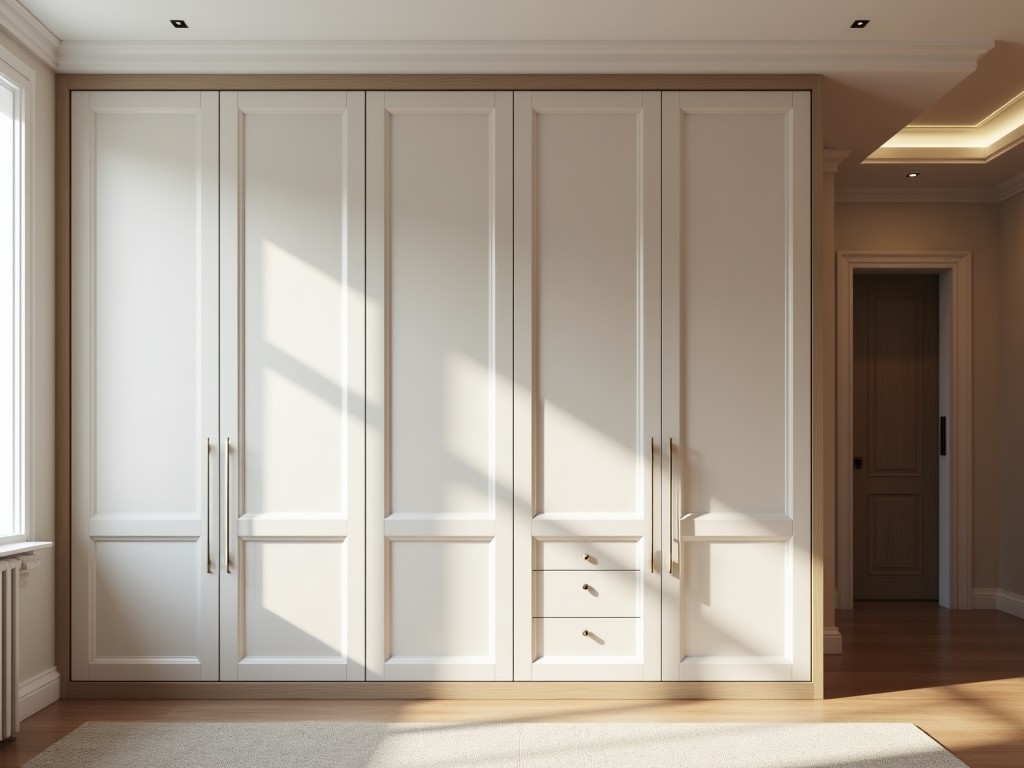
Cost Of Custom Built Wardrobes
Inquire Now
Cost Factors for Custom Built Wardrobes
When evaluating the price of a custom built wardrobe, several technical variables influence the final quotation. Understanding these factors enables engineers and procurement teams to compare offers on an equal basis and to anticipate cost implications of design changes.
Primary Cost Drivers
The largest contributors to wardrobe cost are raw material selection, surface finish, hardware specifications, and labor associated with assembly and installation. Each of these categories can be broken down into measurable attributes that directly affect the unit price.
Material Cost Comparison
| Material | Base Cost (USD/m²) | Typical Finish Options | Notes |
|---|---|---|---|
| Particleboard (melamine faced) | 15‑25 | Melamine, low‑pressure laminate | Most economical; limited moisture resistance. |
| MDF (medium density fibreboard) | 20‑30 | Veneer, paint, PVC laminate | Uniform density; good for routed profiles. |
| Plywood (birch or hardwood) | 30‑45 | Veneer, stain, lacquer | Higher strength; suitable for load‑bearing frames. |
| Solid wood (oak, maple) | 50‑80 | Stain, oil, polyurethane | Premium appearance; greater movement with humidity. |
Design Complexity and Labor
Labor cost scales with the number of distinct operations required to produce a wardrobe. Simple carcass panels with butt joints incur minimal machining, whereas integrated drawers, sliding door mechanisms, and internal accessories increase machining time, fastening, and alignment steps.
- Number of doors (hinged vs sliding) – sliding doors require track hardware and precise alignment.
- Drawer count and type (soft‑close, push‑to‑open) – each drawer adds box fabrication, slide installation, and front fitting.
- Interior fittings (shoe racks, pull‑out baskets, lighting) – each accessory introduces additional parts and fastening points.
- Custom profiles (curved panels, beveled edges) – necessitate CNC routing or specialized tooling.
Surface Finish and Treatment
Finish selection affects both material cost and long‑term maintenance. The table below outlines typical finish categories, their incremental cost impact, and key performance attributes.
| Finish Type | Cost Adder (USD/m²) | Durability Rating* | Typical Applications |
|---|---|---|---|
| Melamine (low pressure laminate) | 0‑5 | Good (scratch resistant, moderate moisture) | Budget wardrobes, rental units. |
| High‑pressure laminate (HPL) | 5‑12 | Very good (impact, moisture) | Healthcare, education, high‑traffic. |
| Veneer (real wood) | 8‑18 | Fair‑good (requires seal) | Residential, office interiors. |
| Paint (PU or acrylic) | 10‑20 | Good (UV stable with topcoat) | Custom colors, matched interiors. |
| Stain & oil (solid wood) | 12‑25 | Fair (needs re‑oil) | Premium residential, boutique. |
*Durability rating based on typical wear in indoor environments; higher values indicate better resistance to scratching, moisture, and impact.
Hardware and Accessories
Hardware selection contributes a measurable cost per unit and influences functional lifespan. Common items include hinges, drawer slides, door handles, and mounting brackets.
- Concealed hinges: $2‑$4 each; soft‑close adds $1‑$2.
- Ball‑bearing drawer slides: $3‑$6 per pair; full‑extension soft‑close $5‑$9.
- Sliding door hardware (track, rollers, guides): $15‑$30 per door set.
- Handles/knobs: $1‑$8 each depending on material (zinc alloy, stainless steel, brass).
- Interior lighting (LED strip, motion sensor): $8‑$20 per linear meter.
Volume and Economies of Scale
When ordering multiple units, setup costs (programming CNC, jig fabrication) are amortized over the batch, reducing the per‑unit price. Typical price breaks appear at quantities of 5, 10, and 20 units, with reductions ranging from 5% to 15% compared to a single‑unit quote.
Requesting a Quote
To obtain an accurate cost estimate, provide the following technical data:
- Overall dimensions (height, width, depth) and number of modules.
- Preferred panel material and thickness.
- Door type (hinged, sliding, bi‑fold) and quantity.
- Drawer specifications (size, slide type, soft‑close).
- Finish details (material, color, gloss level).
- Hardware preferences (hinge, slide, handle models).
- Any interior accessories (lighting, pull‑outs, shoe racks).
- Delivery location and installation requirements.
Frequently Asked Questions
Can dimensions be customized to fit uneven walls?
Yes. Wardrobes are manufactured to the exact measurements supplied. For out‑of‑square walls, scribe strips or adjustable filler panels can be incorporated.
What information is required before a quotation can be issued?
A basic layout sketch, material preference, door/drawer configuration, and finish choice are sufficient for a preliminary estimate. Final pricing requires detailed shop drawings.
How are quality checks performed?
Each panel undergoes dimensional verification (±0.5 mm), finish adhesion testing (cross‑hatch per ASTM D3359), and hardware functional cycling (5,000 open/close cycles for hinges, 10,000 for slides).
Related Products
Related News

custom closet spatial organization and material performance analysis

Bathroom Taps Technical Analysis
