
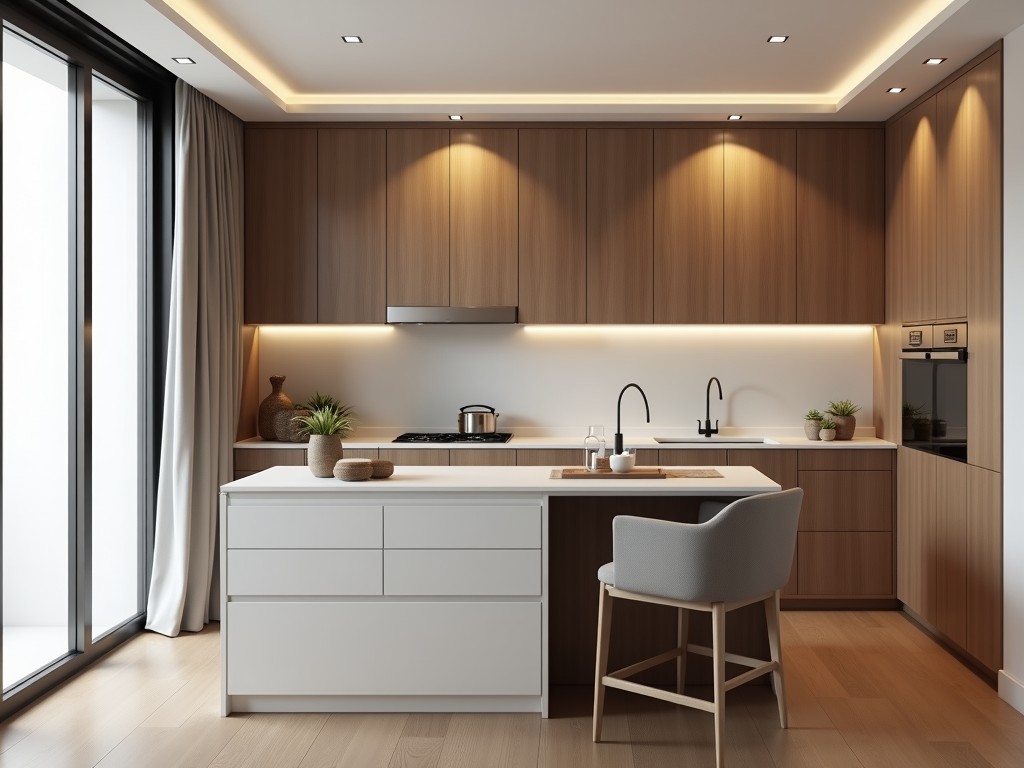
Custom Built In Kitchen Cabinets Cost
Inquire Now
Custom Built-In Kitchen Cabinets: Cost Considerations
Understanding the cost drivers of built‑in cabinetry helps procurement teams compare quotes and avoid unexpected expenses.
Primary Cost Factors
Four variables dominate the price: material selection, door thickness, hardware type, and finish complexity.
Each factor can be expressed in measurable terms that directly affect the unit price.
| Factor | Typical Range | Cost Influence |
|---|---|---|
| Material (particleboard, MDF, plywood, solid wood) | $120–$350 per linear foot | Base material cost |
| Door thickness (16mm, 19mm, 22mm) | +$15–$45 per linear foot | Increases with thickness |
| Hardware (soft‑close hinges, drawer slides) | +$8–$20 per linear foot | Depends on mechanism rating |
| Finish (laminate, veneer, lacquer) | +$10–$30 per linear foot | Surface preparation adds cost |
Material Selection and Performance
Particleboard offers a density of 600–650 kg/m³ and is suitable for low‑humidity environments.
MDF provides a uniform surface with a density of 700–800 kg/m³, allowing tight tolerances on routed profiles.
Plywood cross‑laminated layers give a bending strength of 30–40 MPa, improving resistance to sag in long spans.
Solid wood species such as maple or oak exhibit a modulus of elasticity around 10–12 GPa, providing premium stiffness but requiring acclimatization to avoid movement.
- Particleboard – density 600–650 kg/m³, cost‑effective for dry interiors
- MDF – density 700–800 kg/m³, smooth finish for painted surfaces
- Plywood – 3‑ply or 5‑ply, cross‑laminated, bending strength 30–40 MPa
- Solid wood – species specific, modulus of elasticity 10–12 GPa, natural grain
Customization Choices Impacting Cost
Cabinet dimensions, internal accessories, and door styles are the three main levers that adjust the final price.
Specifying exact measurements reduces waste and can lower material usage by up to 12 % compared with standard sizes.
- Width increments of 50 mm allow precise fit to wall studs
- Internal accessories such as pull‑out shelves add $25–$60 per unit
- Door styles: slab, shaker, raised panel – each changes surface area and edge‑banding requirements
Manufacturing Considerations
CNC routing achieves positional accuracy of ±0.2 mm, ensuring consistent reveal gaps.
Edge‑banding thickness of 0.5 mm PVC or 1.0 mm wood veneer protects substrate edges from moisture ingress.
Typical production lead time ranges from 3 to 4 weeks for standard material grades, extending to 6 weeks for exotic finishes.
Quality Control Philosophy
Each cabinet undergoes a three‑point check: dimensional verification, surface finish adhesion, and hardware functional test.
Dimensional verification uses a calibrated laser measuring system with repeatability of ±0.1 mm.
Adhesion of laminate or veneer is measured by a cross‑hatch test per ASTM D3359, requiring a rating of 5B or better.
Soft‑close hinges are cycled 50,000 times to confirm load capacity of 25 kg per hinge without degradation.
Typical Applications
Built‑in cabinets are specified in residential kitchens where precise alignment with appliances reduces installation time.
In commercial break rooms, the cabinets provide durable storage with load‑rated shelves capable of supporting 50 kg per shelf.
Healthcare facilities specify antimicrobial laminate surfaces that meet ISO 22196 standards for bacterial resistance.
Frequently Asked Questions
Yes, CNC programming allows tolerance of ±0.2 mm on overall width, height, and depth.
A layout sketch, material preference, door style, hardware selection, and finish type are needed.
Each unit undergoes dimensional check, adhesion test, and hardware functional cycle as described in the QC section.
To move forward, you can:
Related Products
Related News

custom closet spatial organization and material performance analysis

Bathroom Taps Technical Analysis
