
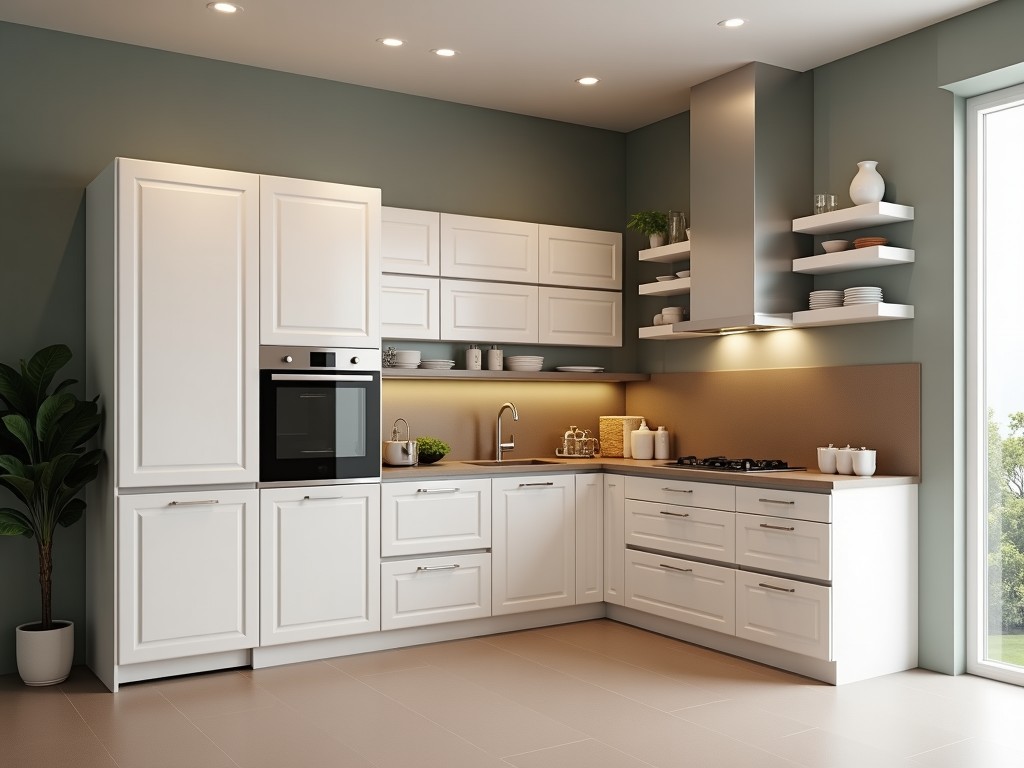
Custom Kitchen Wall Cabinets
Inquire Now
Custom Kitchen Wall Cabinets
Wall-mounted cabinets are designed to store utensils, dishware, and supplies above countertops, freeing floor space and improving workflow in commercial kitchens. Unlike stock units, custom wall cabinets are fabricated to match exact opening dimensions, ceiling heights, and load requirements specific to each installation.
Material Options
The substrate determines stiffness, weight, and resistance to moisture or impact. Common choices include hardwood plywood, particleboard, medium-density fiberboard (MDF), and stainless steel, each with distinct mechanical properties.
| Material | Typical Thickness (mm) | Density (kg/m³) | Moisture Resistance | Typical Use |
|---|---|---|---|---|
| Hardwood plywood (birch) | 18 | 600‑700 | Moderate (sealed edges) | General purpose, high load |
| Particleboard | 16‑18 | 650‑750 | Low (requires laminate) | Cost‑sensitive installations |
| MDF | 16‑18 | 700‑800 | Low (edges sealed) | Smooth finish applications |
| Stainless steel (grade 304) | 1.2‑1.5 | 8000 | Excellent | Hygienic, high‑temp zones |
Selection is based on required load capacity, exposure to steam or cleaning agents, and budget constraints. For example, stainless steel provides corrosion resistance but adds weight, while plywood offers a high strength‑to‑weight ratio for heavy dishware.
Construction & Joinery
Cabinet carcasses are assembled using mechanical fasteners that resist shear and withdrawal forces. Typical joints include dado grooves for shelves, rabbet joints for side‑to‑top connections, and cam lock or dowel systems for quick assembly.
Shelf adjustability is achieved through metal pins or bored holes spaced at 32 mm increments, allowing reconfiguration without tools. Load‑bearing shelves are often reinforced with a 2 mm steel bracket or a thickened plywood core.
Hinges are selected based on door weight and opening angle; concealed soft‑close hinges typically rated for 20 kg per pair reduce impact noise and extend service life.
Customization Dimensions & Hardware
Wall cabinets are produced to exact width, height, and depth dimensions requested by the project. Standard depth ranges from 300 mm to 350 mm, but depths as low as 250 mm or as high as 450 mm are feasible for specialized equipment clearance.
Cut‑outs for range hoods, electrical conduits, or plumbing are incorporated during CNC cutting, ensuring clean edges and minimal material waste. Hardware options include pull‑handles, integrated lighting channels, and magnetic catches.
Load ratings are calculated per shelf; a typical 18 mm plywood shelf with edge banding can safely support 40 kg uniformly distributed, while stainless steel shelves exceed 80 kg under the same conditions.
Finishing Options
Surface finishes protect the substrate and provide the desired aesthetic. Common finishes are high‑pressure laminate (HPL), wood veneer, UV‑cured acrylic coating, and powder‑coated metal.
HPL offers a wear layer of 0.8 mm with abrasion resistance rated at 150 cycles (Taber test). Veneer thickness ranges from 0.6 mm to 1.2 mm and is sealed with a polyurethane topcoat of 30 µm dry film thickness. Powder coating on stainless steel provides a 60 µm film with corrosion resistance exceeding 500 hours salt spray.
Edge banding is applied using PVC or ABS strips of 0.4 mm thickness, bonded with hot‑melt adhesive to prevent moisture ingress at exposed edges.
Applications in Commercial Kitchens
Wall-mounted cabinets free up valuable floor space, allowing for smoother traffic flow between cooking stations, prep areas, and storage. By positioning frequently used items at eye level, they reduce bending and reaching, which improves ergonomics and reduces fatigue during long shifts.
In environments subject to strict hygiene regulations, such as hospitals or food‑processing facilities, stainless‑steel wall cabinets meet cleanability standards because they lack pores and can withstand aggressive cleaning agents.
Custom sizing ensures that cabinets fit precisely between exhaust hoods, windows, or structural columns, eliminating gaps where debris could accumulate and simplifying compliance with local building codes.
Quality Control & Testing
Each cabinet undergoes dimensional verification using laser‑measured jigs, with tolerances held to ±0.5 mm on width and height and ±1.0 mm on depth. Shelf load tests apply a static weight equal to 1.5× the rated capacity for 24 hours to detect creep or joint failure.
Finish adhesion is assessed via cross‑hatch tape testing (ASTM D3359) targeting a rating of 5B (no removal). Humidity cycling exposes samples to 90 % RH at 38 °C for 48 hours, after which visual inspection checks for delamination or warping.
Final inspection includes hinge operation checks, door alignment within 1.0 mm, and verification of all customer‑specified cut‑outs and hardware placements.
Frequently Asked Questions
- Can dimensions be customized? Yes, width, height, and depth are produced to project‑specific measurements; refer to the material options page for thickness choices.
- What information is required before quotation? We need overall cabinet layout, desired material, finish type, hardware preferences, and any required cut‑outs for appliances or utilities.
- What materials are available? See the table above for typical substrates; alternative materials such as marine‑grade plywood or aluminum are available upon request.
- How is quality inspected? Dimensional tolerance, load testing, finish adhesion, and humidity cycling are standard checks as described in the Quality Control section.
- What packaging methods are available? Cabinets are packed flat‑packed with corner protectors, stretch film, and placed in corrugated cartons rated for 30 kg stacking weight.
- How are export shipments protected? For overseas shipments, additional moisture‑barrier bags and wooden pallets with ISPM‑15 compliance are used.
Get a Quote
To discuss your specific wall‑cabinet requirements, provide your project dimensions, material preferences, and finish details.
Request a QuoteRelated Products
Related News

custom closet spatial organization and material performance analysis

Bathroom Taps Technical Analysis
