
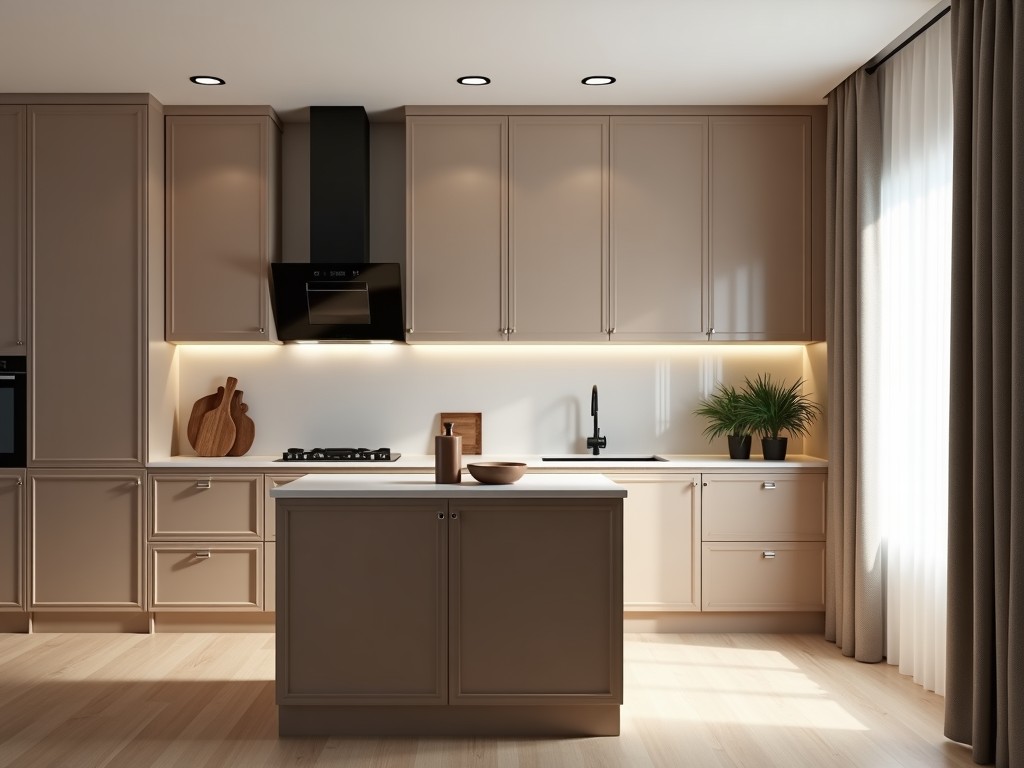
Oem Diamond Custom Kitchen Cabinets
Inquire Now
OEM Diamond Custom Kitchen Cabinets
Diamond-impregnated surface layers provide a measurable increase in abrasion resistance, typically raising the Mohs hardness rating from 3 for standard laminate to 6–7, which reduces surface wear in high‑traffic kitchen environments.
The core material is usually engineered wood particleboard or MDF with a density ranging from 600 to 800 kg/m³, selected to balance stiffness and screw‑holding strength for hinge and drawer hardware.
Material Selection and Performance
Surface hardness is quantified using the ASTM D3389 Taber Abrasion test, where diamond‑treated panels show wear indices below 30 mg/1000 cycles, compared with 80–120 mg for untreated melamine.
Moisture resistance is expressed as equilibrium moisture content (EMC) after 24 h at 90 % RH; typical EMC values stay under 5 % for the sealed diamond layer, minimizing swelling in humid climates.
Fire performance can be upgraded to meet UL 94 V‑0 ratings by incorporating fire‑retardant additives in the substrate, a specification available upon request for commercial projects.
Customization Capabilities
Customization begins with client‑supplied CAD drawings, which are translated into CNC‑cut panel layouts to maintain tolerance within ±0.2 mm across all edges.
Options include:
- Door overlay styles: full overlay, partial overlay, inset.
- Edge treatments: 2 mm PVC, 3 mm ABS, or laser‑etched diamond‑pattern edge.
- Hardware configurations: soft‑close hinges, blind‑mount drawer slides, or push‑to‑open mechanisms.
- Interior accessories: pull‑out spice racks, adjustable shelving with 32 mm pitch, or integrated lighting channels.
Finish colors are matched using spectrophotometric measurement, ensuring ΔE < 2 between sample and production run.
Manufacturing Process
Panels are first routed to size on a 5‑axis CNC router, achieving positional accuracy of ±0.1 mm, then conveyed to a vacuum press where the diamond‑infused overlay is bonded under 1.2 MPa pressure and 130 °C temperature for 45 seconds.
Edge banding is applied via hot‑melt adhesive with a line speed of 18 m/min, followed by cooling tunnels that set the bond to a shear strength exceeding 1.5 MPa.
Final assembly uses dowel and cam lock fasteners, providing a joint tensile capacity of approximately 3 kN per connector, suitable for dynamic loads encountered in daily cabinet use.
Quality Assurance and Inspection
Each batch undergoes a three‑point inspection: dimensional verification with a coordinate measuring machine (CMM), surface hardness spot‑check using a portable durometer, and adhesion testing via ASTM D4541 pull‑off method (minimum 1.8 MPa).
Inspection criteria include:
- Panel thickness variance ≤ 0.3 mm across a 600 mm span.
- Edge bond failure rate < 0.5 % per 100 units tested.
- Finish color deviation ΔE ≤ 1.5 under D65 lighting.
Packaging employs corner protectors and 6 mm corrugated board, tested to withstand a 1.5 m drop without damage to the diamond surface.
Typical Applications
In commercial kitchens, the enhanced abrasion resistance reduces maintenance cycles, extending the service life of cabinet fronts by an estimated 3–5 years compared with standard laminate.
Residential projects benefit from the low‑emission core (CARB Phase 2 compliant) and the ability to match bespoke design palettes without compromising durability.
Healthcare facilities specify the non‑porous diamond layer for its ease of cleaning and resistance to chemical disinfectants, meeting ISO 22196 antimicrobial efficiency thresholds when treated with silver‑ion additives.
Technical Specifications
| Parameter | Typical Value / Range | Notes |
|---|---|---|
| Panel Thickness | 18 mm – 22 mm | Customizable per load requirements |
| Surface Hardness (Mohs) | 6 – 7 | Diamond‑infused overlay |
| Density (Core) | 600 – 800 kg/m³ | Particleboard or MDF |
| Moisture Resistance (EMC @ 90 % RH) | ≤ 5 % | Sealed diamond layer |
| Fire Rating (Optional) | UL 94 V‑0 | Additive‑based |
| Hinge Load Capacity | Up to 40 kg per door | Soft‑close hardware |
| Edge Bond Shear Strength | > 1.5 MPa | Hot‑melt adhesive |
| Finish Color Tolerance | ΔE ≤ 2 | Spectrophotometric verification |
Frequently Asked Questions
Can dimensions be fully customized to match existing layouts?
Yes. CNC programming accepts client‑provided DXF or DWG files, allowing tolerances of ±0.2 mm for length, width, and depth, ensuring seamless integration with surrounding millwork.
What information is required before a quotation can be issued?
We need a detailed cabinet schedule (quantities, door styles, interior accessories), material preferences for core and overlay, hardware specifications, and any regulatory compliance targets (e.g., fire rating, VOC limits).
Which core materials are available for the diamond overlay?
Standard options include moisture‑resistant particleboard (MR‑PB), medium‑density fibreboard (MDF), and, upon request, plywood with cross‑band veneer for increased screw‑holding strength.
How is quality inspected during production?
Each lot undergoes dimensional CMM checks, durometer hardness testing, and adhesion pull‑off tests; results are recorded and traceable to the specific production order.
What packaging methods protect the diamond surface during transit?
Panels are separated by 3 mm polyethylene foam, corner‑protected with recycled cardboard, and placed in double‑wall corrugated boxes tested to ISTA 3A standards.
Get a Quote
To begin the quotation process, please share your project specifications via our contact form. Our engineering team will review the details and return a detailed cost breakdown and lead‑time estimate within two business days.
Request a QuoteRelated Products
Related News

custom closet spatial organization and material performance analysis

Bathroom Taps Technical Analysis
